What to pack in an urban evacuation bag
Start with what you would need to reach safety, contact your household and manage the first hours away from home.
Make a plan before you pack
Agree on a meeting point and an alternative place to stay. Write down who will collect children, who can help with mobility or transport, and how to reach one another if the usual route or phone network is unavailable. Check the emergency guidance where you live and the arrangements for your building.
In immediate danger, put people first. Leave the bag behind if collecting it would delay a safe exit. For a fire in a block of flats, know the building’s fire plan in advance. Follow the emergency service’s instructions, use the route identified in the fire plan when directed to evacuate, and never enter a route blocked by smoke or flames. If you cannot get out safely, call the local emergency number and tell the operator exactly where you are.
Pack for the people and the journey
- Water and food. Pack drinking water and food you can eat without cooking. Account for the route, allergies, infant feeding and any utensils you need. Keep larger supplies at home if you could not carry them safely.
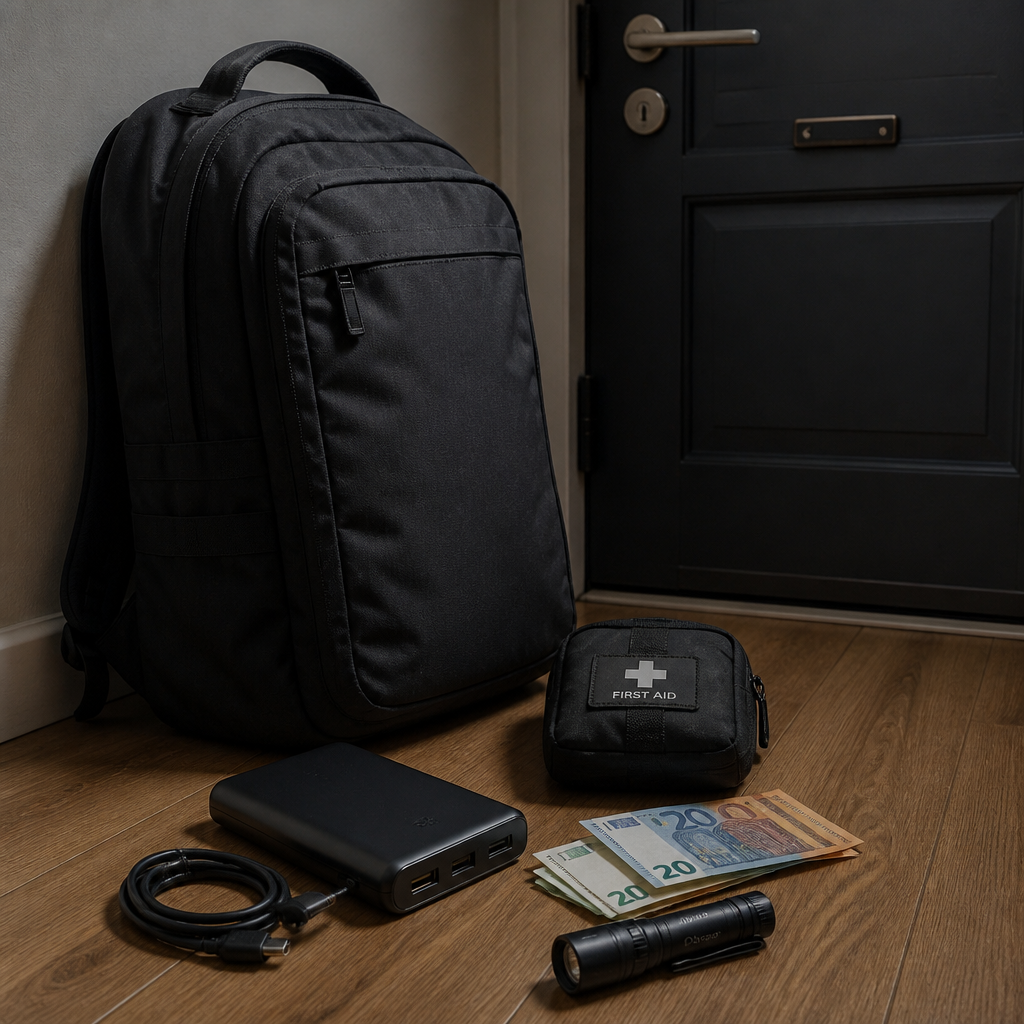
- Light and communication. Include a working torch, a charged power bank and the right cables. A small battery radio may help you follow local information. Put essential numbers on paper.
- Access and payment. Keep the keys you need, a manageable amount of cash and useful document copies in a protected pouch. Know which originals you may need.
- Health and daily needs. Include the first aid supplies you know how to use and the items your care plan calls for. Think through glasses, hearing aids, mobility aids, children’s needs and how you would transport pets.
- Clothing and hygiene. Match layers, a dry change of socks and basic toiletries to the season and the journey. Keep suitable shoes easy to reach.
Try the bag with the real load
There is no single suitable weight. In calm conditions, see whether you can lift the packed bag, wear it and walk a short, safe route while keeping a hand free for anything you normally need. If you share the load, agree who carries each item and keep essential contacts available to more than one person.
Choose a dry place within easy reach that leaves doors and walkways clear. Make a short list of daily items you might add if there is time. Recheck the bag when the season, your route or your household changes. As a first test, find the bag, put it on and retrieve the torch and contact list.
The urban evacuation bag series
- Part 1. What to pack (this guide)
- Part 2. Bag choice and charging
- Part 3. Documents and cash
- Part 4. Medicines and personal needs