

REALISTIC PREPAREDNESS
Prepare calmly for everyday disruptions.
Practical preparedness for people who live in flats, share a home and rely on everyday services. Start with what matters to your household, then improve it one step at a time.
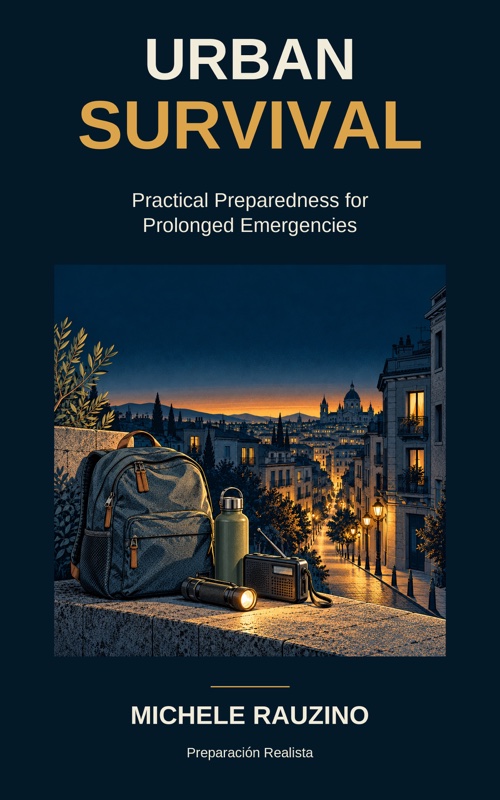
The Realistic Preparedness book
Urban Survival
Practical Preparedness for Prolonged Emergencies
Plan for disruptions to water, power and communications, and build a household emergency plan you can test and share.
15 chapters with international examples, checklists and planning worksheets.
KindlePaperback
View the book on AmazonLatest articles
-
Black Friday emergency kit: what is worth buying?
Three equipment examples to compare against your household needs, with product variants, buying checks and a spending limit.
-
Earthquake away from home: in the street, in a car or in a shop
Practical steps for an earthquake while walking, driving or shopping, followed by a clear update to the people who need to hear from you.
-
Seven-day power outage: what changes after the first 72 hours
A hypothetical day-four scenario for checking remaining supplies, arranging resupply and deciding when to stay elsewhere.
-
You can’t go home tonight: how to manage the first 24 hours
A practical plan for shelter, medication, pets and family updates when an incident leaves you unable to return home overnight.
-
Cold-weather sleeping bags: how to read temperature ratings
How to compare comfort, limit and extreme ratings and account for the insulation between your sleeping bag and the ground.
-
Home inventory: what to photograph before a loss
A simple method for photographing your belongings, keeping an off-site backup and recording damage after a loss.





Start with your household
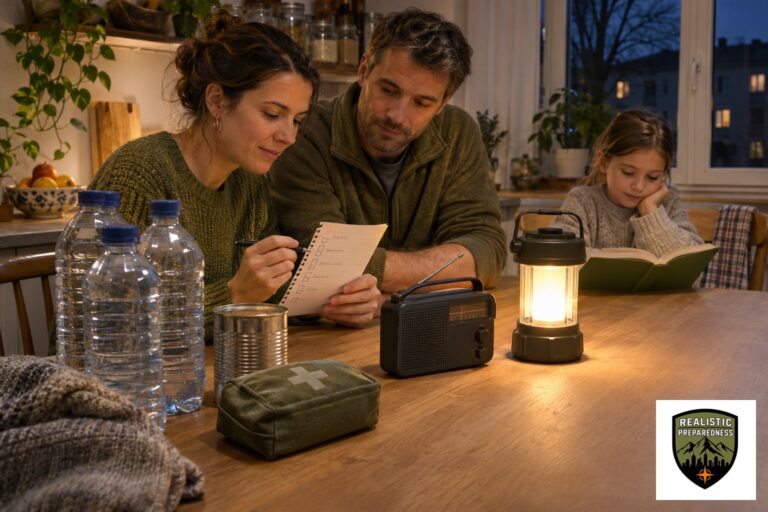
A power cut, a disrupted journey or a phone network that stops working can make ordinary tasks harder. A little preparation gives you fewer decisions to make when routines change.
Realistic Preparedness focuses on useful plans, familiar equipment and choices that fit your home, budget and circumstances. You do not need to solve everything at once.
Four things worth thinking through
- Everyday essentials. Think about water, food, light and the things each person in your home relies on. Start by checking what you already have.
- A shared plan. Talk about who might need help, how you would get in touch and what you would do if your usual arrangements were unavailable.
- Useful equipment. Choose tools for a clear purpose. Learn how they work, how they are powered and where their limits are.
- Reliable information. Know where to find local official guidance. Check the source and date before acting on or sharing a message.
Your first step can be small
Choose one ordinary situation: an evening without mains power, a delayed journey home or a phone that cannot connect. Then work through three questions:
- What would be difficult for the people involved?
- What could you already use to make it easier?
- What is one practical gap you can address?
Write down the answer, agree it with the people who need to know and put the useful items somewhere easy to find. Revisit the plan when your circumstances change.
Preparation that fits real life
The project brings together household planning, everyday equipment and ways to keep in touch. The aim is to make thoughtful decisions before a disruption, with clear information and a realistic view of what any plan can achieve.
Meet the person behind Realistic Preparedness, or get in touch with a question or correction.
For information about personal data and cookie choices, read our privacy and cookie policy.