
Choosing an evacuation bag and keeping devices charged
An everyday backpack can work well if it is comfortable when loaded and you can reach what you need.
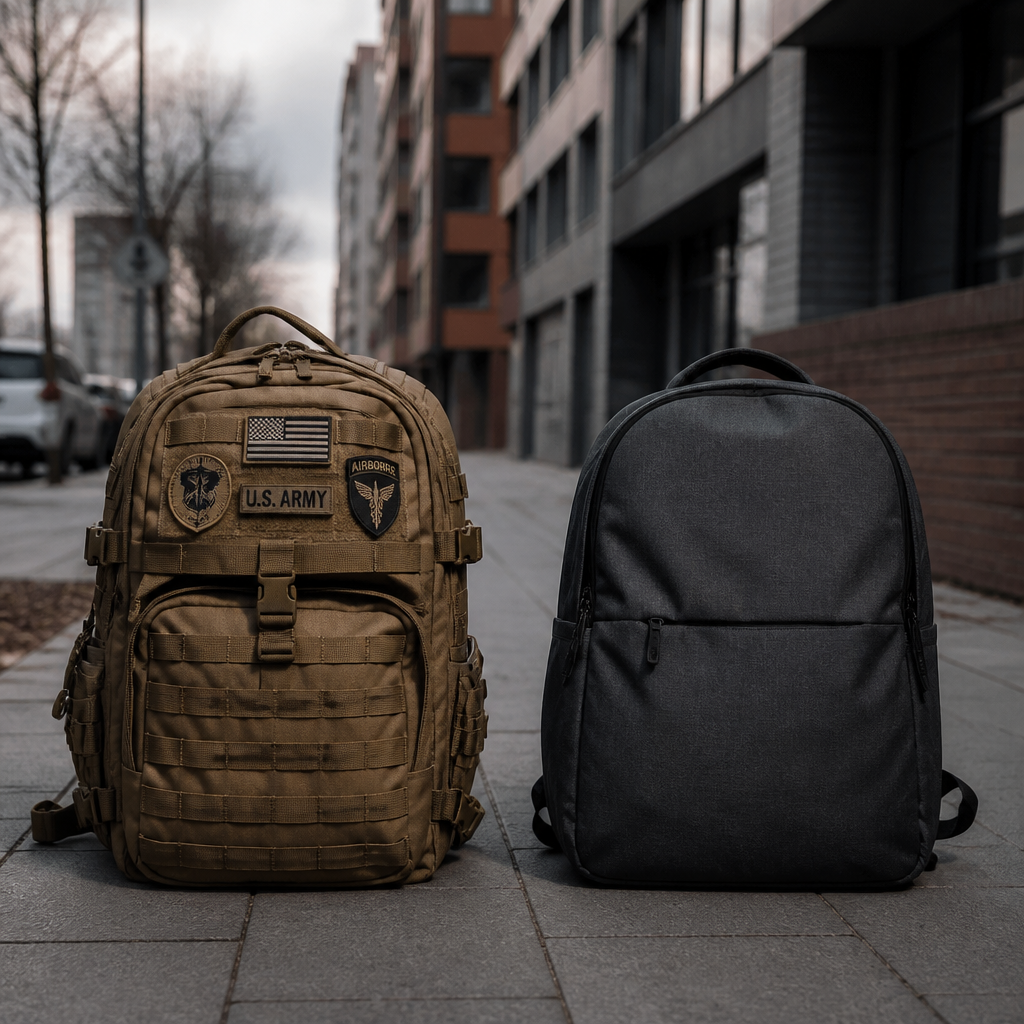
Try a bag you already own
Check the shoulder straps, seams and zips. Load the bag with the items you chose in part 1 and adjust it before walking a short, familiar route. Try opening it and finding the torch or document pouch without unpacking everything. Keep your hands free for a child, a mobility aid or any other task that matters on your route.
Appearance offers no guarantee of safety. Choose a bag that fits your circumstances, and weigh the trade-off between extra space and extra weight. If something does not fit, check whether it needs to come with you before buying a larger bag.
Build a charging pouch
Keep a charged power bank, a compatible mains charger and the cables you actually use in one easy-to-find pouch. Check each plug at both ends. A USB-C connector alone does not tell you which charging speeds a cable, charger or device supports. If you use a multiport charger, try it with the devices connected together.
Compare energy in watt-hours (Wh) where the manufacturer provides it. A power bank’s mAh figure needs its reference voltage to give an energy figure. Some energy is lost during conversion and charging, so use a real test with your phone to see how much of a top-up you get. Check how long the power bank itself takes to recharge.
Give the torch its own backup
Start with a torch that works and a way to keep it running. If the phone and torch share one power bank, they draw on the same reserve. A small light with spare batteries gives you another option. Store loose batteries in a case that keeps their terminals away from metal.
Follow the manufacturer’s limits for storage and charging. Keep the power bank dry, away from direct sun and away from loose keys or coins. Stop using a swollen or damaged battery. If you want to recharge the bank while it powers another device, check that the model explicitly supports this.
Test the exact combination
Charge the devices you intend to carry with the cables in the pouch. Note the charge gained, the power left and any connection that did not work. Keep a working spare cable if losing the only one would leave you without charging.
For a longer interruption, see charging essential devices during a power cut for more on portable solar, compatible inputs and the limits of charging in poor light.
The urban evacuation bag series
- Part 1. What to pack
- Part 2. Bag choice and charging (this guide)
- Part 3. Documents and cash
- Part 4. Medicines and personal needs