Medicines and personal needs during an evacuation
If you rely on a medicine, a device or another person’s help, plan how that support would continue away from home.
Make a medicine plan with your pharmacist or care team
Discuss how much of your prescribed medicine you can keep ready, which prescriptions or records to carry, and whom to call if a refill is unavailable. Follow your prescribed treatment. For medicines or equipment you use every day, keep a short list of what to collect when you can do so safely.
Keep medicines labelled in their original packaging with the instructions. Check the storage directions for each product. If refrigeration is required, ask your pharmacist which carrier to use, how long it will maintain the required conditions and how to check them. If a medicine has been outside its recommended temperature range, ask a pharmacist or your care team promptly what to do. If it has touched floodwater, do not use it and seek help getting a replacement promptly.
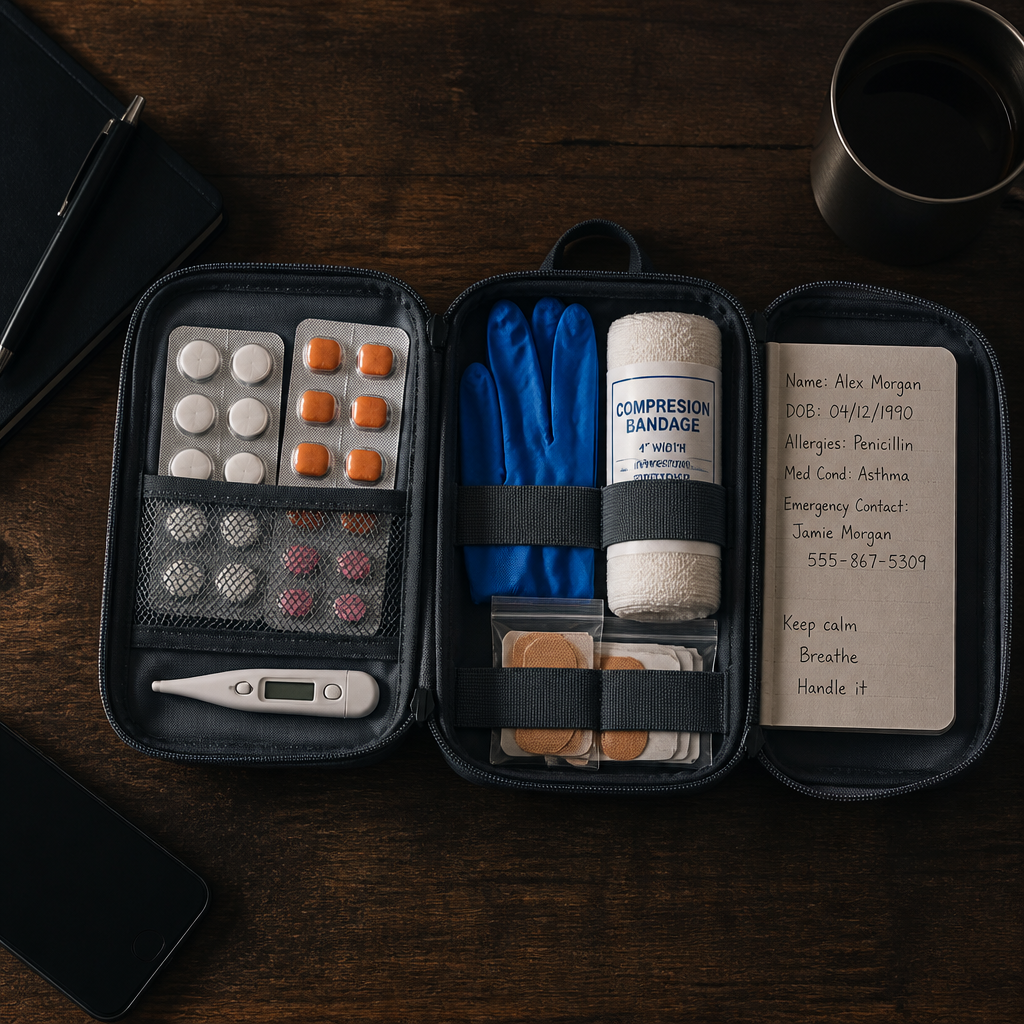
Write a short health information card
List your current medicines with the strength, prescribed dose and schedule. Add relevant conditions, known allergies, essential equipment, your care contact and the person to notify. Date the card and keep any useful prescription copies with it.
Store the card where you and anyone you have agreed should help can find it. Keep it out of public view. Update it when your treatment, equipment or contact details change.
Pack first aid supplies you can use
Check what is already in your kit. Dressings, plasters and disposable gloves are useful basics for many households. Check seals and expiry dates. A basic kit can be a starting point, and a first aid course can help you use it. Ask a pharmacist or clinician about any additional medicine you are considering.
Plan for access and powered equipment
Think through glasses, hearing aids, communication aids, mobility equipment and help with transport. Confirm who can reach you and whether the route and the place you plan to stay are accessible. Ask your building manager or local emergency planning service about the evacuation arrangements if you need assistance.
For a medical device that needs electricity, ask your care team and the manufacturer which backup power is compatible, how long it can run under your normal use and what to do if that backup runs out. Write down the support number and the agreed next step.
Review the plan with the people who will help
Check that someone you trust knows where to find the kit and how to reach the right service. Review supplies and expiry dates at intervals agreed with your care team and after any change in treatment. If there is immediate danger, follow emergency instructions and leave belongings behind when collecting them would delay getting to safety.
The urban evacuation bag series
- Part 1. What to pack
- Part 2. Bag choice and charging
- Part 3. Documents and cash
- Part 4. Medicines and personal needs (this guide)