
Documents and cash for an evacuation
Pack the details you would need to identify yourself, reach someone or pay for essentials if your phone or network was unavailable.
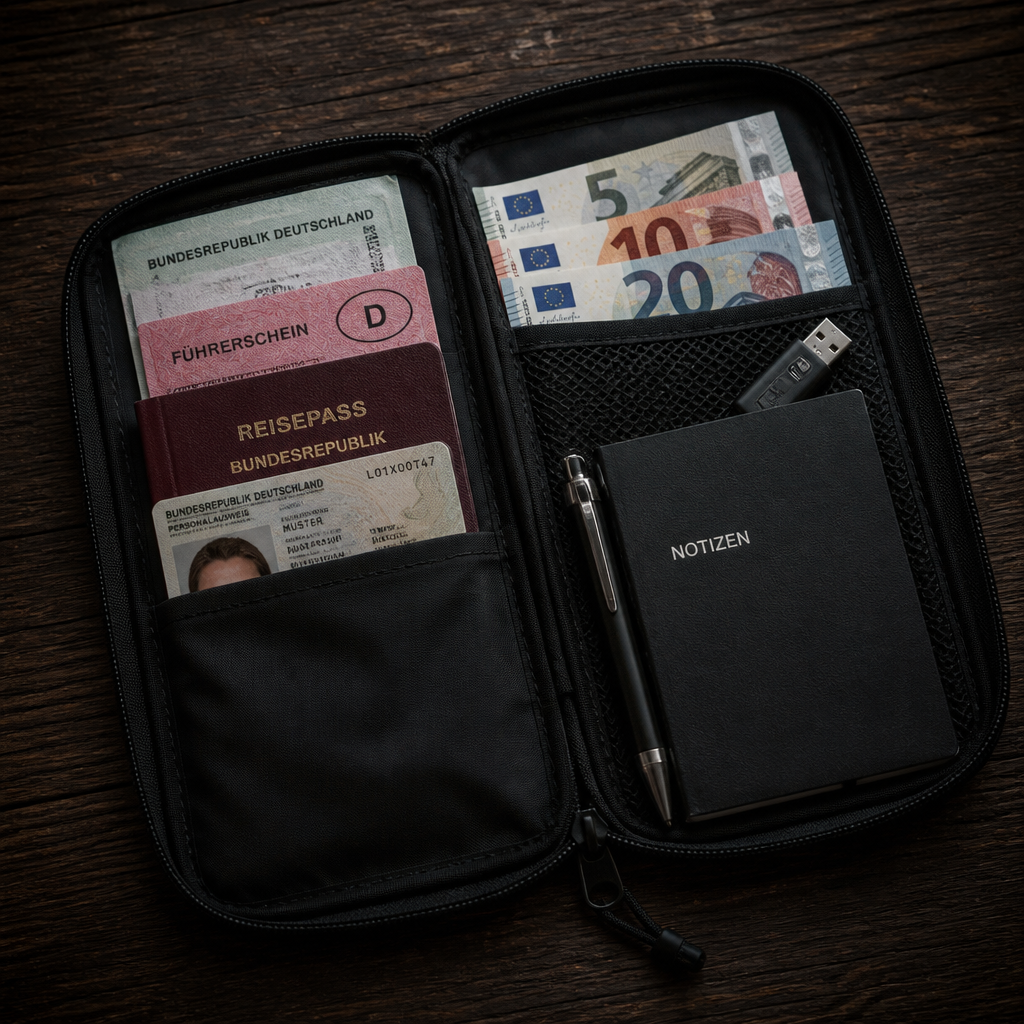
Choose the records you would use
Start with a short list of the situations you might face. For temporary accommodation, you may need identification and the address of where you are going. For an insurance call, you may need your policy number and a contact number. Add only the paperwork relevant to children, pets or care arrangements in your household.
Keep copies legible and know where to find the originals. Copies are useful references. Check what the relevant authority or service accepts for identification, travel or other formal requirements before counting on a copy or a photo.
Keep a short contact list on paper
Write down numbers for people you may need to reach, an agreed contact outside your area, relevant care providers and your insurer. Add your meeting place and a date for the list. Give another adult in the household access to the essential details you have agreed to share.
Try making sense of the list with your phone switched off. A name next to each number and a short note about when to call can save time when you are tired or distracted.
Plan a way to pay
A power or network outage can interrupt card payments and cash withdrawals. Keep a modest amount of local cash if it fits your budget. Small notes and coins can help when change is scarce. Estimate what you might need for essential travel and food instead of using a fixed sum for every household.
Treat the cash as one option alongside your usual payment methods. Cash can be lost or stolen, and transport or shops can still close. Agree on another route or place to stay if you cannot pay for your first option.
Protect the pouch and keep it current
Use a pouch that protects the papers from moisture and keep it inside the bag. Keep account passwords and card PINs separate. If you carry a protected digital copy, check that you can open it offline on a device you would actually have. Keep a separate backup in a secure place.
Review the contents when a contact, address, document or policy changes. For a quick check, find your insurer’s number and the person you would call first without using the internet. Remove paperwork you no longer need.
The urban evacuation bag series
- Part 1. What to pack
- Part 2. Bag choice and charging
- Part 3. Documents and cash (this guide)
- Part 4. Medicines and personal needs