How to prepare meals in a flat during a power cut
The power goes off just as you’re about to make dinner, and the induction hob goes dark. If you live in a flat, start by checking what you can serve without heating and whether you have the light, safe water and clean space you need to prepare it.
For the first evening, a simple meal can save time and avoid the risks of using an unfamiliar stove. Think about what everyone at home can eat and drink with the supplies you can use safely.
Start with a meal you can serve cold
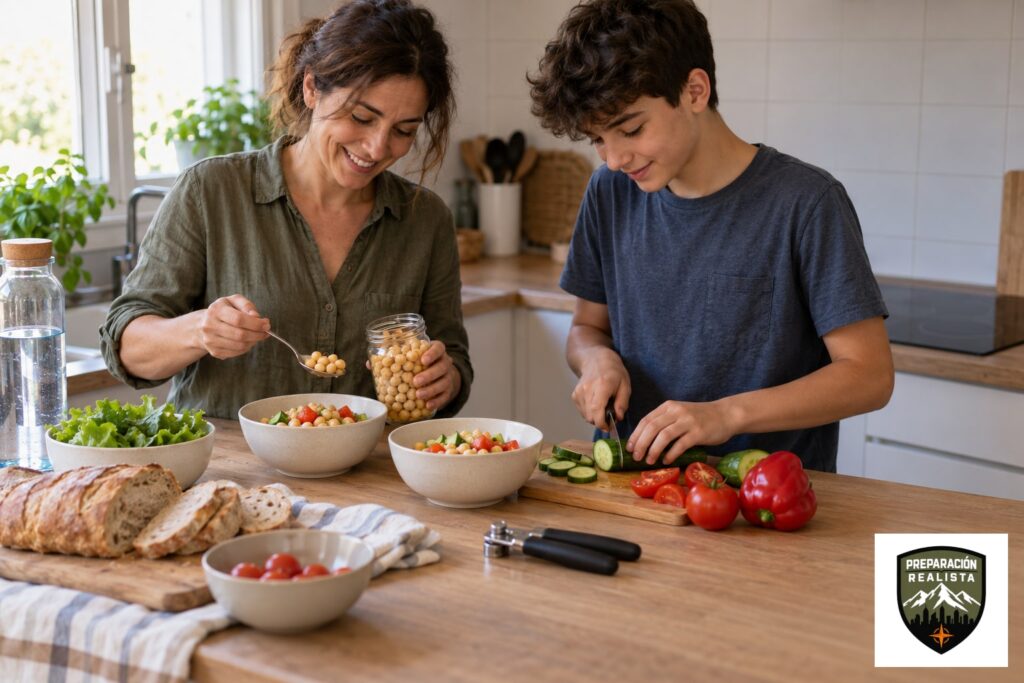
Look for foods the label says are ready to eat, such as cooked beans or chickpeas in a tin, tinned fish, bread, crackers and whole fruit. Follow the preparation and storage instructions. Leave dried pulses and anything that needs cooking for when you can cook it safely.
Check for allergies and think about age, texture and any diet recommended by a healthcare professional. Follow the usual preparation instructions for foods with special requirements, such as infant formula. Stick to the specified amounts and ingredients.
| Meal idea | What to check |
|---|---|
| Ready-to-eat chickpeas, bread and tinned fish | Allergens, portions and a way to open the tins |
| A sandwich with a ready-to-eat filling | Storage instructions, especially once opened |
| Whole fruit and your usual breakfast foods | Safe water to wash fruit and anything each person needs |
Adapt these ideas to what your household eats. Check that you have a manual tin opener and know how to use it. Open only what you can use or store safely and follow the label once the pack is open. Our 72-hour emergency pantry guide can help you plan around food you already eat.
If you need a replacement, the OXO Good Grips manual tin opener on Amazon (paid link) is one example from our recommended gear guide. Look for a handle you find comfortable to grip. If the opener you have works well, keep it with your supplies. As an Amazon Associate I earn from qualifying purchases.
Set up a clean, well-lit spot
Find a clean surface, an LED light and the utensils you need. Use safe drinking water for food preparation and handwashing. If the taps have stopped working too, choose a meal that needs few utensils and little washing up.
Keep the fridge and freezer doors closed as much as possible. If the cut lasts several hours or the fridge warms up, check your local food safety guidance before using foods that need refrigeration. Do not rely on reheating to make improperly stored food safe. See the Food Standards Agency’s advice for power cuts (PDF).
If you have young children at home, split up tasks before you open tins or start cutting food. One person can look after the children while another prepares the meal. Keep sharp lids and utensils out of reach and use knives only where you can see what you’re doing.
Keep camping stoves and barbecues outdoors
Never use a portable camping stove or charcoal barbecue inside your flat, in a garage or on an enclosed patio. Burning fuel can produce carbon monoxide, a poisonous gas you cannot see or smell. Opening a window does not make outdoor cooking equipment safe indoors. See the CDC’s advice on power cuts and carbon monoxide.
A balcony may be too close to doors, windows or vents, or lack the clearance the manufacturer requires. Check the manual and your building’s rules. If you have no suitable outdoor space, stick to a meal you can serve cold.
Skip improvised cookers that use candles or alcohol fuel. They bring open flames and hot surfaces into a space where you can see less clearly. Use a battery-powered light for food preparation. See the Government of Canada’s guidance on power cuts.
If your flat has an installed gas cooker
Read the manual for your model and follow your gas supplier’s advice. Some cookers need electricity for ignition or safety features. Use the cooker only as the manufacturer allows, with the required ventilation. Never bypass its safety features or use it to heat your home.
If you smell gas or suspect a leak, avoid flames and electrical switches. Get outside and call your local gas emergency service from a safe place. Follow their instructions. See Cadent’s gas emergency guidance.
Can a portable power station run a cooking appliance?
Before plugging in a kettle or hotplate, compare the appliance’s power draw with the station’s rated continuous output. Then work out how much battery energy the task would use. Even a few minutes at high power can leave less charge for lights and phones. Our guide to portable power station runtime shows how to do the sums.
If you already have compatible equipment, test it in normal conditions, following the manuals. If you just need to get one meal on the table, a cold option may be more practical than buying a bigger battery. Use Start here to plan for the rest of the household.
Try the plan on an ordinary evening
Make one of your meals without using the hob, microwave or kettle. Leave the electricity on and keep essential equipment running. Notice whether you have the right tin opener, whether the portions are enough and how much washing up the meal leaves.
Try this next. Write down two meals everyone at home can eat without cooking and put the ingredients you normally use together. If the power goes out tomorrow, dinner is one less decision to make.