
Build a 72-hour emergency pantry
A useful emergency pantry starts with food your household already eats. A few familiar meals, ready when everyday services are disrupted, can make a difficult day more manageable. Start with your cupboards, then fill the gaps gradually with your normal shopping.
This guide uses 72 hours as a starting point. The UK government’s Be Ready checklist also suggests preparing for three days. Your household, local risks and official guidance may call for a different reserve. Three days is a planning target, not a promise about how long a disruption will last.
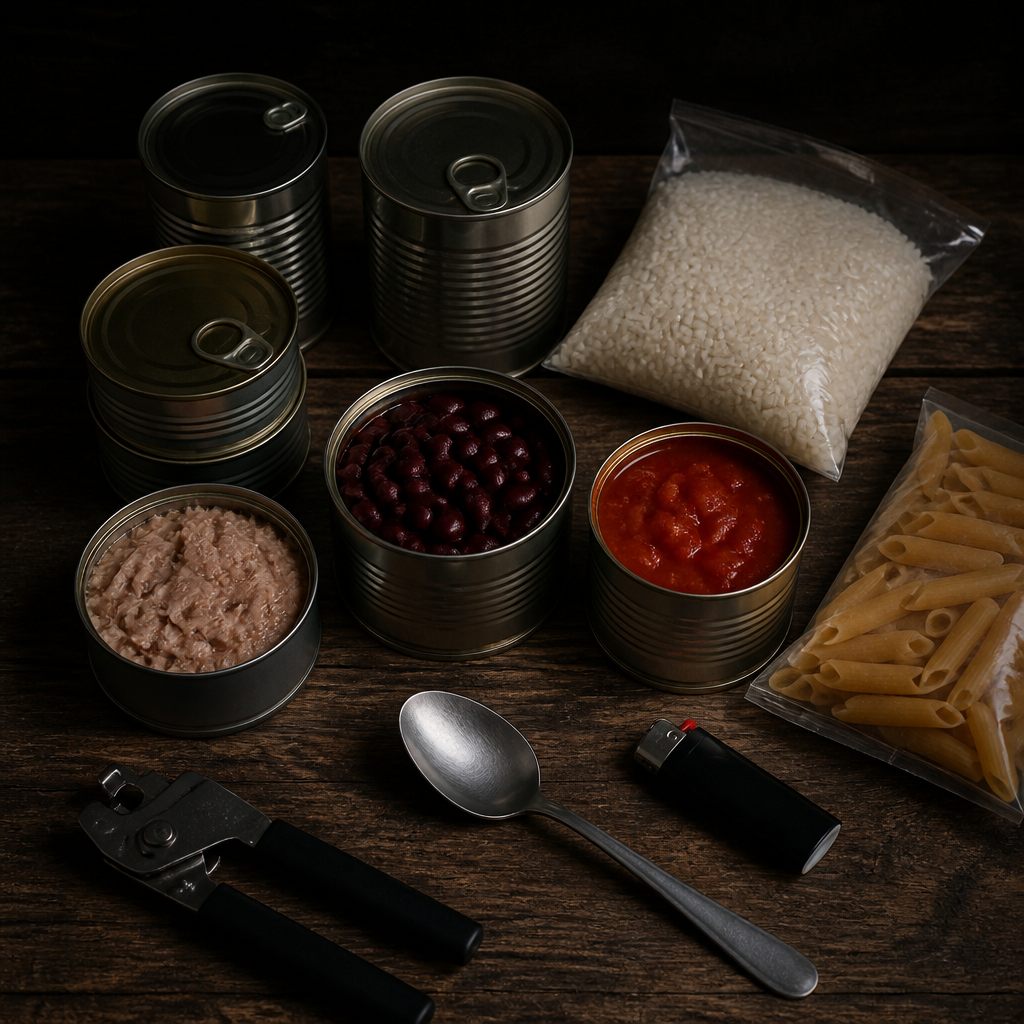
First question: can we eat it without cooking?
During a power cut, you may have no safe way to heat food. Build a core reserve that needs neither cooking nor refrigeration while unopened. Dry rice and pasta are useful cupboard staples, but they need water and a working cooker: they cannot do this job on their own.
Check each product’s preparation instructions. A tin or pouch is not automatically ready to eat cold. The Food Standards Agency’s canned-food guidance makes that distinction: some products can be eaten without heating; others need cooking.
Write down breakfast, lunch and dinner for each of the three days, plus any snacks. Count actual portions for everyone at home, rather than simply counting packets. Would those meals be enough? Would each person be able and willing to eat them?
Build a list around your household
- Meal bases: cooked beans or lentils, tinned fish or other familiar options that suit your diet. Choose products labelled as suitable to eat without further cooking. Pick pack sizes you can finish in one meal if refrigeration is unavailable.
- Accompaniments: crackers, long-life bread or similar foods you already use. Match them to your meal plan instead of buying a large quantity of one item.
- Variety: ready-to-eat vegetables, tinned fruit and familiar small extras. Nuts, dried fruit or chocolate can supplement meals where suitable; they are not a complete meal plan by themselves.
- Individual needs: check allergies, children’s food and any prescribed dietary requirements. Do not improvise substitutes for foods or feeds that require specific preparation. Include your pets’ usual food too.
- Water and tools: plan drinking water and any water needed for essential food preparation, following local guidance and household needs. Keep a manual tin opener, suitable cutlery and hand-hygiene supplies with the food.
What will it cost?
There is no reliable single price for a three-day pantry. The total depends on what you already have, how many people you are feeding, dietary needs and local prices. A fixed shopping basket can look inexpensive while still missing meals or relying on equipment you cannot use.
Check your existing supplies against the meal plan. Buy missing portions as your budget allows, using foods you will also eat in ordinary weeks. This makes the reserve easier to maintain and avoids a separate box of unfamiliar products.
Cooking during a power cut
Do not assume a domestic gas cooker works without electricity: check the instructions for your model. Never bypass ignition or safety devices. If you cannot establish that it can be used safely, use your ready-to-eat meals.
Never use a portable gas camping stove, charcoal barbecue or other outdoor-only fuel-burning appliance indoors, even beside an open window. Fuel-burning equipment can produce carbon monoxide, a gas you cannot see or smell. See the CDC’s carbon monoxide prevention guidance.
A balcony does not automatically make an appliance safe either. Follow its outdoor-use instructions and building restrictions, and keep fumes away from doors, windows and air vents. If there is no suitable place to cook safely, your pantry should let you eat without lighting anything.
Rotate the food you actually use
Put the items that need using first at the front. Include them in normal meals and replace what you take. Keep food in the conditions stated on the label and check dates and packaging regularly, especially when household needs change.
In UK labelling, a use-by date concerns safety; a best-before date concerns quality. Neither replaces correct storage. Follow opening instructions too: a product that keeps in a cupboard when sealed may need refrigeration once opened. Read the official guide to food dates and storage.
Do not use leaking, bulging or badly damaged tins, or taste suspect contents to check them. Do not plan to keep opened leftovers at room temperature when their label requires refrigeration.
One useful step today
Choose one day’s meals your household would happily eat without cooking. Find the ingredients you already own and note the missing portions. Then extend that plan to three days, checking water, pack sizes and the tin opener as you go.
You can begin with one shelf and a short list. The aim is a reserve you understand, can use and can afford to keep replenished.
English editorial review: 5 November 2026. Sources linked above: UK government Be Ready, the Food Standards Agency, GOV.UK food labelling guidance and the US CDC. Follow the relevant official advice where you live.