Earthquake away from home: in the street, in a car or in a shop
You are paying in a shop when the floor starts moving. Somebody heads for the exit, and a tall display stands behind you. An earthquake away from home means making decisions in unfamiliar surroundings. Start by recognising whether you are indoors, out in the street or driving.
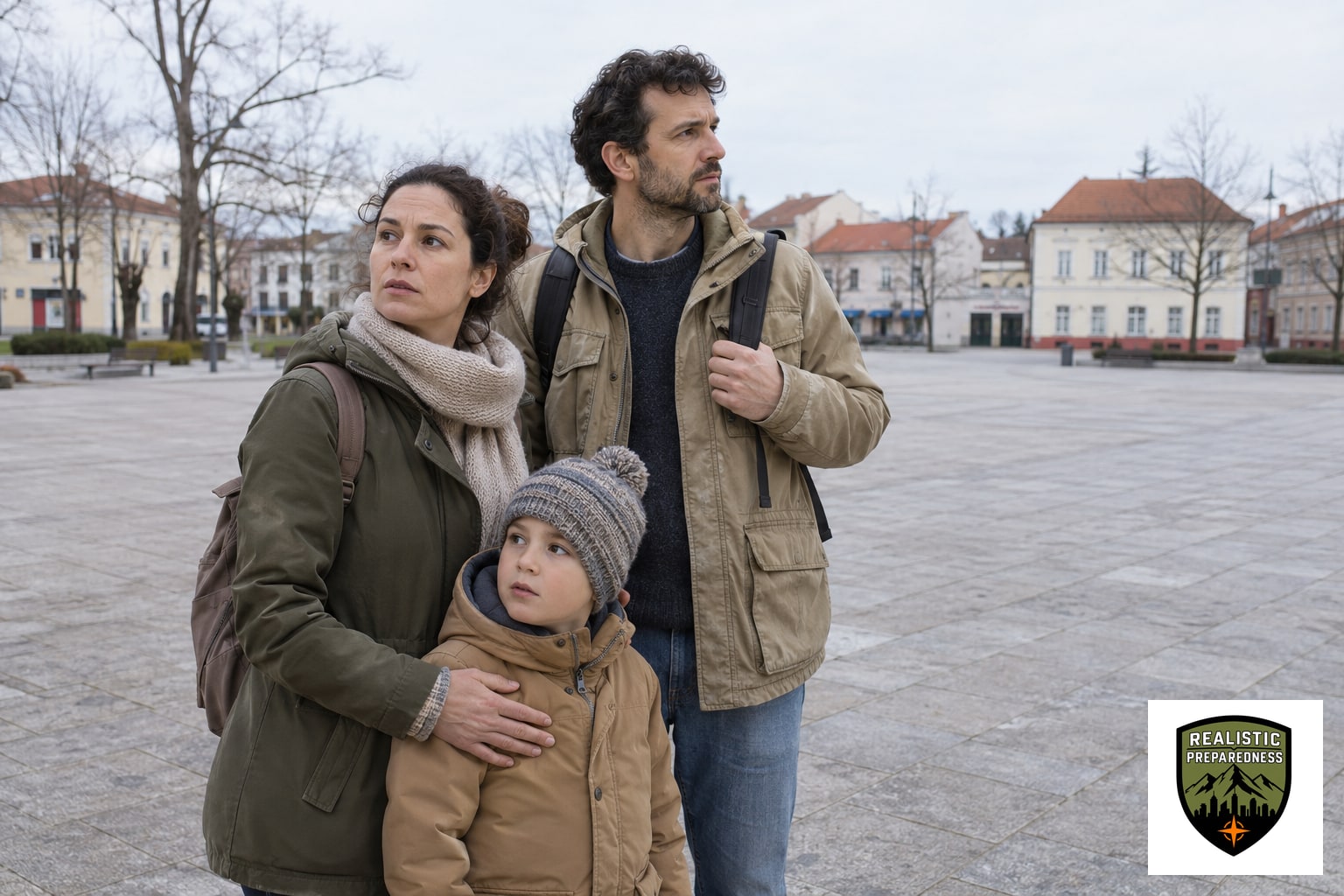
In the street, check what could fall from above
Move away from building fronts, walls, glass and electricity poles towards a nearby open space, keeping out of the road. Roof tiles, plant pots and other objects can fall from above. Once you reach a clearer space, stay aware of your surroundings.
If you are holding a child’s hand, give one concrete instruction, such as “come with me to that open space”. Help anyone with reduced mobility according to their needs and avoid abrupt movements. Spain’s National Geographic Institute earthquake guidance.
If you are driving, find a safe place to stop
Slow down and stop safely away from bridges, overhead structures, buildings and power lines. Put on your hazard lights and stay inside during the shaking if the vehicle remains safe. Check official updates and the condition of the road before continuing. Italian Civil Protection earthquake guidance.
If other family members are elsewhere, confirm their situation and whether the route is open before setting off to collect them.
In a shop, protect yourself where you are
During the shaking, avoid rushing towards the exit. Move away from glass displays and shelves that could topple. Drop down, cover your head and neck, and take cover under a sturdy table if one is close enough, holding on to it. When the shaking ends, follow staff instructions and the indicated safe exit, watching for broken glass and fallen items.
A crowded doorway can create another hazard. Keep your companions close and leave purchases behind. Wait until access is safe before trying to retrieve belongings. CDC earthquake safety guidance.
Send a useful family update afterwards
Check whether anyone needs assistance. Call 112 for immediate danger or injuries needing emergency help in Spain and across the EU, and give your location. For family updates, try a short message with your condition, location and next step. “I’m OK. I’m in the square beside the library. I’ll wait here for instructions” gives people something they can act on.
Responders may restrict access even when your home is nearby. Wait for information about safe routes and aftershocks. Keep out of damaged buildings.
Near the sea, consider the coastal risk as well
In a tsunami risk area, strong shaking or unusual sea behaviour can require moving away from the coast to higher ground under the local evacuation plan. Check the signs where you live or spend your holidays. Italian Civil Protection tsunami guidance (in Italian).
On your next ordinary shopping trip, notice an open space, the shop exits and a possible meeting point. Use our Start here guides to build the rest of your household plan.