
Cold-weather sleeping bags: how to read temperature ratings
The product listing says “−5°C” in large type, but the label shows three temperatures. One describes conditions in which a reference sleeper can expect reasonable comfort. Another assumes a sleeper who tolerates more cold. The third refers to emergency conditions. When choosing a cold-weather sleeping bag, look for the comfort rating first.
What each rating means
| Label | How to read it |
|---|---|
| Comfort | An estimate for a reference sleeper who is more sensitive to cold, lying in a relaxed position. Start here when comparing bags. |
| Limit | An estimate for a reference sleeper who tolerates more cold and curls up in the bag. You may still feel cold at this temperature, especially if you tend to sleep cold. |
| Extreme | An emergency threshold with a risk of hypothermia. Leave this number out of your overnight plans. |
Check whether the manufacturer lists testing to EN ISO 23537. The results come from test conditions and help you compare adult sleeping bags covered by the standard. Your experience depends on the insulation under you, moisture and how you respond to cold. A product page that gives one temperature without labelling it “comfort” or “limit” leaves that comparison unclear. ISO 23537-1:2022 · Quechua’s example of a temperature label (in Spanish).
Compare two bags for a night at 3°C
Suppose the overnight low is 3°C (37°F). Bag A lists a comfort rating of +8°C and a limit of +3°C. Bag B lists comfort at 0°C. The second leaves room below the forecast low. If you sleep cold, the forecast is uncertain or the site is exposed to more wind, allow extra margin or choose a more sheltered place to sleep.
A real label that is easy to misread
The deuter Orbit +5°C is a summer bag. The manufacturer lists 9°C comfort, 5°C limit and −9°C extreme. The +5°C in the name is the limit. If you expect a night at 3°C, look for a warmer comfort rating. deuter technical specifications.
If you are shopping for mild nights and those ratings suit your plans, you can compare the standard model on Amazon Spain (affiliate link).
Consider the insulation under you
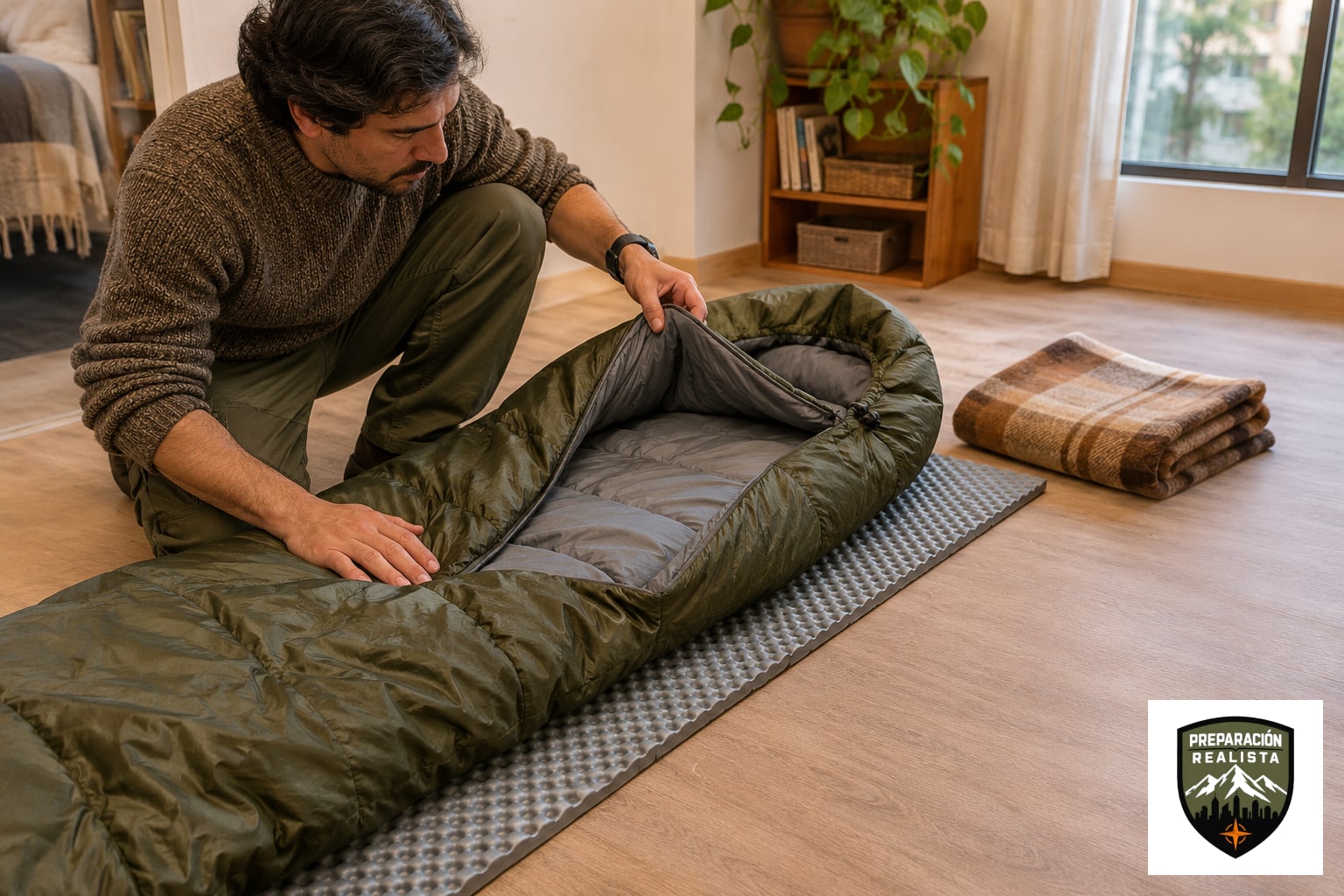
Your body compresses the filling underneath you when you lie down. An insulated pad helps reduce heat loss into the ground. Where pad R-values are directly comparable, the higher number means greater resistance to heat transfer. Check that the bag zips easily and has room for your feet without crushing the filling. Keep a dry layer for sleeping separate from clothes that got damp during the day.
At home, test the combination you already own
For a heating outage, try the arrangement you would actually use with your bed or pad, dry clothing, and a bag or duvet. That makes it easier to see what you need from a new bag. For outdoor use, test your setup in controlled conditions close to home or a shelter before relying on it on a longer trip. Our guide to 24 hours without heating (in Spanish).
As an Amazon Associate I earn from qualifying purchases.