Stranded by snow on the road: what to do while waiting for help
Snow is coming down harder and the line of cars has been still for twenty minutes. The heater is running, your phone battery is low, and nobody knows when the road will reopen. Before you decide to move, work out where you are, whether it is safe to stay in the vehicle, and who in the car is getting coldest.
Work out where you are and whether you need urgent help
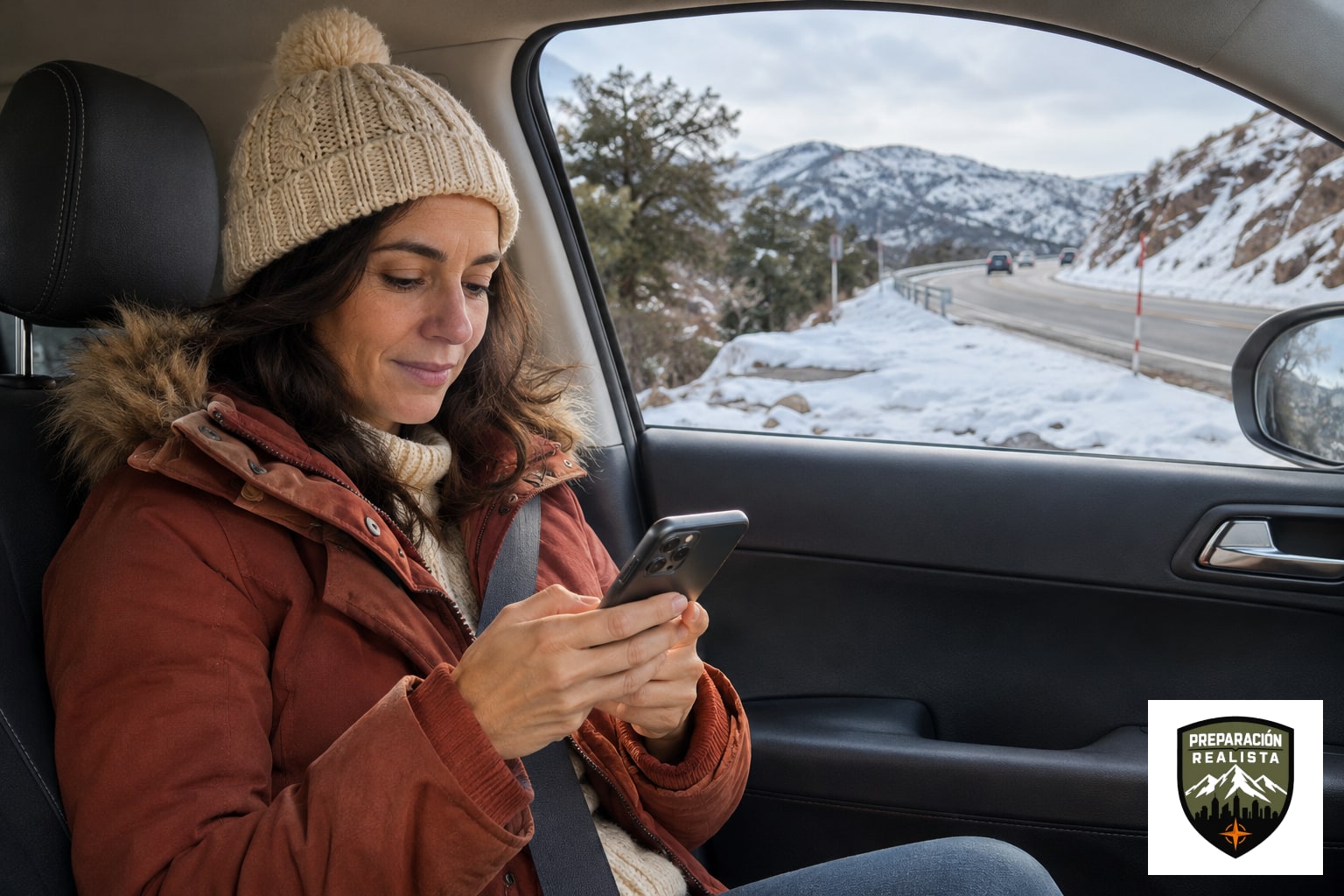
Find the road number, direction of travel, kilometre marker or nearest junction. If you have a signal, save your location and send a brief message to a contact. For example, “We’re on the A-6 towards Madrid, near exit 60. There are three of us and we’re OK. I’ll check in again in an hour.”
If anyone is injured or deteriorating, or the car is at risk of being hit, call 112 in Spain and across the EU. Give your location first and explain who needs help. Use official traffic updates to find out whether a road has reopened. DGT road emergency guidance (in Spanish).
Stay with the vehicle if it is safe to do so
When visibility is poor and you have no confirmed shelter nearby, the vehicle will usually protect you from the wind and help responders find you. Fire, smoke, exposure to moving traffic or an evacuation order can change that decision. Follow the emergency operator’s or officers’ instructions. Avoid walking down the carriageway between vehicles, even if they appear to be stationary.
Keep warm while you wait
- Put on dry layers, cover your head and hands, and wrap a blanket around your legs and feet.
- Share the water and food you can reach. Keep a torch, phone and power bank close by.
- Check on children, older adults and anyone with limited mobility. If someone becomes confused, unusually sleepy or stops responding normally, call for help and describe the symptoms.
Check the risk from your exhaust
Snow can block a tailpipe and allow carbon monoxide to build up. You cannot see or smell this gas. Keep a combustion engine switched off if the exhaust is blocked or you cannot safely confirm it is clear. Stay out of traffic when assessing the situation. If you can safely run the engine, use it for short periods and crack a window for ventilation. If you suspect carbon monoxide exposure, call emergency services and follow their instructions to get to safety. National Weather Service winter storm guidance.
Keep the items you will need within reach
Before your next trip, check whether you can reach a warm layer, a charging cable and some water without unpacking the boot. Try it from your seat with the lights off. If you travel with someone else, agree who checks official updates and who keeps your family contact informed. Our car emergency kit guide (in Spanish).
If you need a power bank and your phone uses USB-C, the Anker Zolo 20,000 mAh (affiliate link, Amazon Spain) has a built-in cable. Check that it charges your phone and top it up before setting out.
As an Amazon Associate I earn from qualifying purchases.