What to do if your metro train stops in a tunnel
The metro stops between stations. A few minutes pass, the doors are still closed and someone suggests walking out. While the train is stopped in a tunnel, pay attention to the information you have and follow the operator’s instructions.
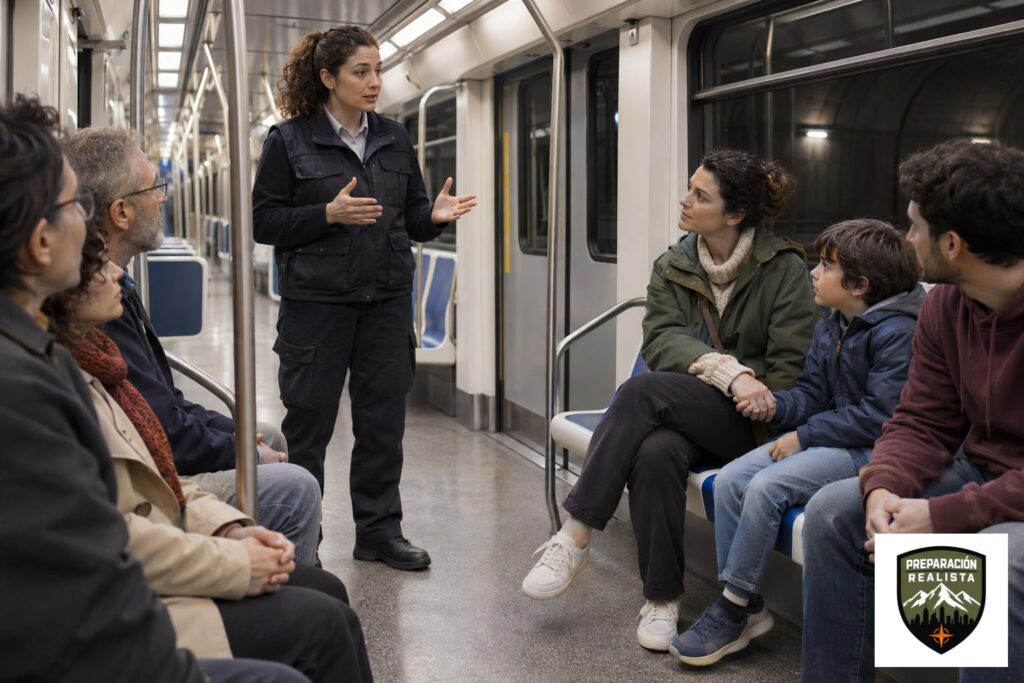
A train stopping between stations does not automatically mean it needs to be evacuated. The operator and emergency teams decide whether passengers should leave, which route to use and what precautions to take. Here’s what you can do while you wait or if staff direct an evacuation.
Listen for announcements
Turn down your headphones and listen to the announcements. Check the screens and listen to staff. If someone missed a message or couldn’t understand it, tell them what was announced and leave out any guesses.
When there’s no confirmed timing, you can still let someone know where you are. “We’re stopped between stations. They haven’t said when we’ll move again.” That gives them something useful without suggesting an evacuation is imminent.
There may be no visible driver on an automated line. Barcelona’s operator, TMB, explains that its automated trains have announcements and intercoms connected to the control centre.
Keep the doors closed and stay aboard unless directed to leave
TMB’s safety guidance warns against going onto the tracks or forcing the doors. A visible walkway or a station that looks close is no indication that the route is safe.
Leave door releases, cabinets and other equipment alone during an ordinary delay. If there’s a genuine danger and you need help, use the marked emergency equipment according to its instructions. Follow staff directions and let them coordinate any movement.
A torch in your bag can help you see, but it cannot tell you whether the tracks are safe. Wait for an authorised route even if someone else is ready to walk out.
Report what you can see and what help is needed
If you see smoke or fire, someone is unwell or there’s another immediate danger, tell staff or use the marked emergency communication system. Say what you can see and answer any questions. Alert staff directly even if other passengers are already messaging about the problem.
| Useful information | What you might say |
|---|---|
| The location you know | “We were heading towards this station. We’re near the back of the train.” |
| What you can see | “Someone needs help” or “There’s smoke at this end of the carriage.” |
| Any support needed | “This passenger uses a wheelchair and will need assistance if we have to leave.” |
| What has changed since the first report | Describe the change without guessing the cause. |
TMB’s passenger guide explains how to request help from the control centre. If there’s an emergency and you can’t reach staff through those channels, call 112 in Spain if you have a connection. Say you’re on a metro train stopped in a tunnel and give the location details you know.
Stay together and tell staff early if anyone needs help
Tell children what you know in simple language. “The train has stopped and we’re going to listen for instructions.” Keep them with you while you check your phone or look for help.
Tell staff if someone needs to sit down, needs help understanding instructions or needs assistance moving. Keep the aisle clear of bags so people can get through. Wait for coordinated help with wheelchairs and changes in level.
For regular trips, agree how you’ll let someone know if a delay affects a pickup. Our school pickup plan (in Spanish) can help families work out who to contact and what to do if they don’t hear from you.
Follow the route staff give you if they order an evacuation
Listen for where to go, when to move and what help is available. Stay with the group, leave belongings behind if retrieving them would delay you, and keep clear of staff working in the area. Tell them early if you can’t follow an instruction safely.
During a Metrovalencia drill in November 2025, the control centre and emergency services coordinated the evacuation. The route during an actual incident depends on conditions and the instructions staff give at the time.
Recheck your journey when you reach a station
Once you’re somewhere safe, check the operator’s updates for routes that are still running. Your usual exit or connection may be affected too. Let anyone waiting for you know what you can now confirm.
Keep a household contact and an offline map (guide in Spanish) handy in case you need to plan a different route.
One thing to do this week: on your next normal trip, notice the signs for requesting help and check how your operator shares updates. Agree what message you’ll send if a delay affects your plans.