About Realistic Preparedness
Preparedness starts with ordinary life: a home, the people who share it and the services that keep it running. Realistic Preparedness is about making that life a little less vulnerable to disruption.
Why this project exists
Much survival advice starts in the wilderness. Many of us live in towns and cities, in flats, with neighbours and limited space. We need plans that make sense in that setting.
Preparación Realista began with a simple question: what changes at home if the power goes out and you do not know when it will return? That question leads to practical choices about essential supplies, light, communication and the people who may need extra help.
Realistic Preparedness is the English edition of that same project. The approach is calm, practical and proportionate to everyday needs.
Who is behind it?
I am Michele Rauzino. I have a technical background and approach the project with an analytical, practical mindset: understand how something works, consider its limits and avoid assuming it will always be available.
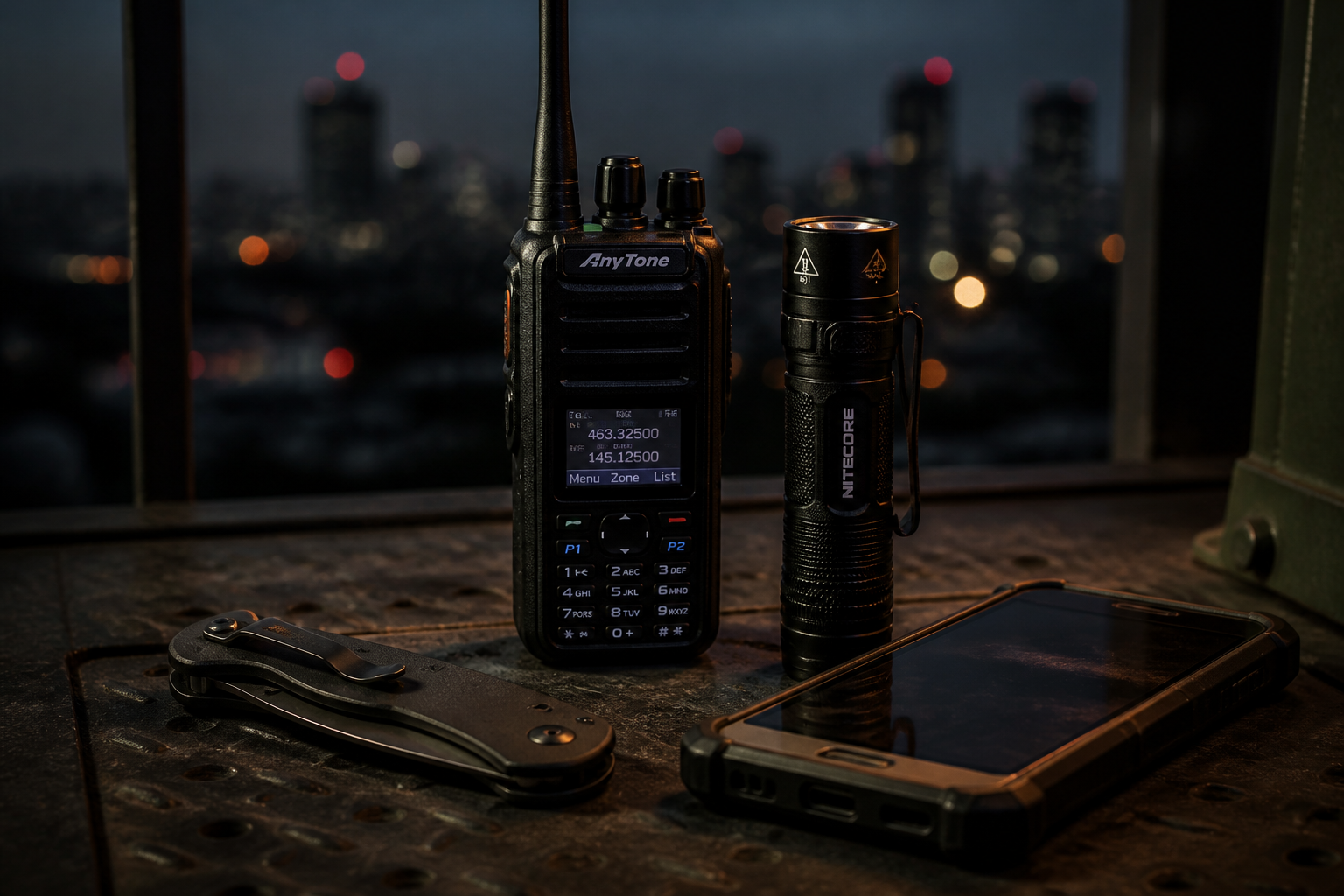
I am also an amateur radio operator, EA2FFX. That interest shapes the attention given to communication when familiar services are unavailable. Analogue and digital radio have a place here, alongside simpler household arrangements.
What guides the content
- Start with a need. A useful plan begins with the people and circumstances involved, rather than a particular product.
- Explain the limits. Equipment, supplies and communication methods have conditions of use. Those conditions matter as much as the features.
- Keep it understandable. Technical terms should help explain a decision. When they are needed, they should be explained.
- Make room for corrections. If something is unclear or inaccurate, readers can flag the page and the specific point.
Equipment and transparency
Some content may include affiliate links. Affiliate links are identified beside the link. A qualifying purchase may earn the project a commission; the purchase takes place with the external retailer.
The editorial starting point remains the same: what is useful, what you already own and whether another purchase serves a real purpose.